Seven Common Mistakes When Replacing Slipped or Broken Slates
A slipped slate looks like a ten-minute job, but wrong nails, mismatched sizes and torn underlay turn a...

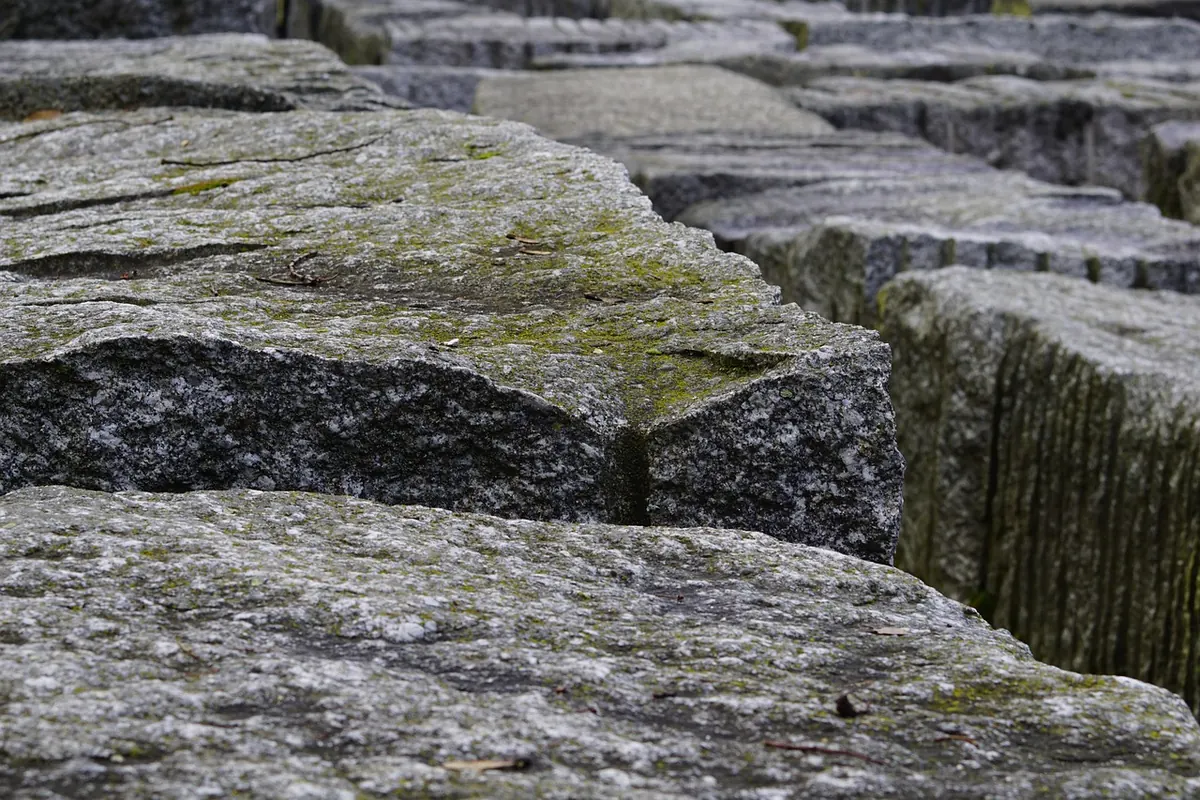
Stand at the rim of a working slate quarry in north Wales and two things surprise you. The first is the scale: great shelves cut into the hillside, each one the work of years. The second is how quiet it is between the loud bits. A siren, a blast, the crunch of a loading shovel — then the steady tap of a wooden mallet as a splitter turns rock into roofing slates, one sheet at a time.
Getting from the face to a finished slate means winning a block without shattering it, sawing it down to something a person can lift, and splitting it along the one direction the rock permits. That last part is where the skill lives.
Welsh slate began as mud on an ancient sea floor, laid down in thin beds. Buried, heated and squeezed by later mountain-building, its clay minerals recrystallised into fine mica and lined up perpendicular to the greatest pressure. Rock that once broke in any direction now broke in one: along the slaty cleavage.
That single fact makes a slate roof possible. The cleavage lets a quarryman open a solid block into sheets far thinner than the beds it started as. Slate also remembers its original bedding, which survives at an angle to the cleavage, and where the two meet the rock behaves differently again. That is where the grain comes from.
Most Welsh quarries work in benches — a series of shelves stepped down the hillside. Each blast is planned days ahead.
Slate shatters easily, so the aim is to loosen, not pulverise. Blocks that survive intact are broken down with feathers and wedges or a hydraulic splitter: quiet tools that push a crack open without shock. Hammers are a last resort.
On the mill floor, blocks are sorted by hand. A good mill hand reads the stone quickly — hard ribs, sandy bands, hairline faults — and marks where to cut. Big water-fed circular saws with diamond segments do the heavy work; slate is abrasive and hard on tooling, so blades are dressed and changed often.
The saw reduces each block to pieces a splitter can handle, and on slate with no saleable riven face it can rip a block into slabs of roughly the right thickness. For a traditional riven slate, though, the saw only provides a clean, square starting point. The surface seen on the roof is made by hand.
The block sits on the bench with its cleavage planes horizontal, at waist height. The splitter holds a wooden mallet in one hand and a broad, flat chisel in the other. He sets the chisel edge against the side of the block at the level of the next split, keeping the blade in line with the grain, and strikes. If the alignment is right, a sheet lifts away along the rift with a dry, papery sound. He levers the chisel, feels the split run, and works along the edge. A block is halved, the halves halved again, and so on until the pieces are slate thickness. The best splitters hold a tolerance of a millimetre or so.
The reason is alignment: mica crystals lined up during metamorphism, plus the trace of earlier bedding, leave the rock slightly different in each direction within the cleavage plane. A splitter does not need the theory. He hears it in the first tap.
Split slates go to the dresser, who squares them with a broad-bladed knife or a mechanical cutter, punches nail holes near the head and sorts them by size and thickness. Traditional sizes carry names such as Duchess, Countess and Marchioness; modern orders are metric, commonly 500 × 250 mm or 600 × 300 mm. Anything flawed goes on the tip. Historically only a fraction of the rock taken from the face left as saleable slate, which is why Blaenau Ffestiniog and Bethesda are ringed by mountains of waste. Those tips are worked today for aggregate, slate granules and, now and then, reclaimed slate.
Split slate the wrong way and you see it at once: uneven thickness, feathered edges, a bruised-looking face. You also see it years later on the roof. Slate is strongest along the grain, so slates are laid with the grain running down the slope, head to tail. A slate cut or laid across the grain is more likely to crack at the nail holes, shear diagonally from a corner or fail in a hard frost.
Grain affects appearance too. The fine parallel lines and faint colour bands on a riven face follow the grain, so slates from a single vein read as a set. Mix veins, or mix orientations, and the same roof plane weathers unevenly. That is why a slater keeps one batch together and lays them the same way up.
In the end it comes down to one stubborn property of the stone. A quarryman cannot argue with the grain. He can only read it, and work with it.
Photo: LiMa74 / Pixabay
A slipped slate looks like a ten-minute job, but wrong nails, mismatched sizes and torn underlay turn a...
A month-by-month routine for inspecting a slate roof from the ground, spotting slipped slates and blocked...
Twelve seasonal jobs — from clearing gutters and checking flashings to replacing slipped slates and...