Seven Common Mistakes When Replacing Slipped or Broken Slates
A slipped slate looks like a ten-minute job, but wrong nails, mismatched sizes and torn underlay turn a...

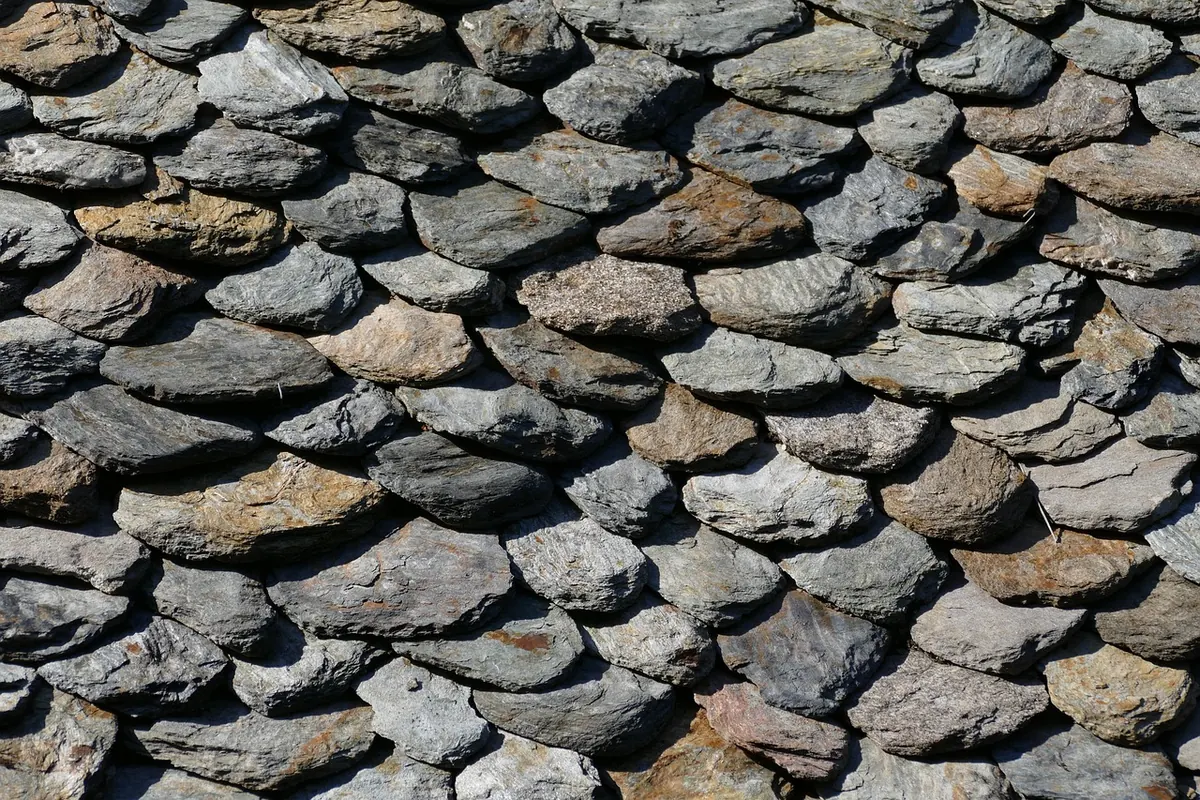
A single patch of fresh slates on a hundred-year-old roof can be spotted from the pavement. The colour is too flat, the edges sit a fraction proud, and the whole repair reads as a rectangle of newness rather than part of the roof. Getting salvaged slate to disappear into an existing slope comes down to three things: finding the right slate, matching its size and thickness, and handling colour with a bit of restraint.
None of it is difficult. It just rewards anyone willing to measure properly, sort carefully and resist the temptation to fill a damaged area with whatever the yard had in the pile that week.
Before you buy anything, get up close to the roof and take notes. Slate sizes are usually quoted in imperial figures — 20×10, 18×12, 16×8 — but the actual slates on an old roof rarely measure exactly what the name suggests. A nominal 20×10 might be 495mm by 250mm on the day, and half a centimetre of drift across a slope is enough to throw your courses out.
Measure several slates in different courses rather than one, and measure them across the width as well as the length. Then check the gauge: the exposed height of a single course. On older roofs the battens are already fixed, so your replacement slates have to work with that spacing.
Two further checks are worth the effort. First, look at the underside from the loft if you can get in, and note the batten spacing and whether the nails are copper, stainless or something older and rusted. Second, photograph the roof in dry weather and again after rain. Slate changes colour dramatically when wet, and a slate that looks a good match at noon in July may look quite wrong by February.
On some older buildings the courses diminish — larger slates at the eaves, smaller ones towards the ridge. If that is what you are dealing with, a single size will not do.
Salvaged slate is not a commodity you can order to spec. It circulates through a handful of channels, and each has its own trade-offs:
Buy more than you think you need. Slates break during handling, and a few spares in the garage will save a lot of hunting later. Do not trust a seller's grade label either — grading means different things at different yards.
If you are re-slating a whole slope, you have some freedom. If you are patching, you do not: the new slates must be the same length and width as the old ones, or the bond will not line up and the laps will not work.
Gauge is calculated from the slate length and the headlap. A slate 500mm long with a 75mm headlap sits on a gauge of 212.5mm, because the headlap is deducted once and the remainder halved. Headlap itself increases as the pitch falls and as the roof's exposure to wind-driven rain rises — commonly somewhere between 65mm and 90mm on UK roofs, so check against current standards and the slate supplier's guidance rather than guessing.
Reclaimed slates vary far more in thickness than new ones. Sorting them into piles before you start is not fussiness — a thick slate sitting between two thin ones will crack the moment anyone walks the roof. Keep each course roughly consistent, and put the heavier slates where they will do the least harm.
A simple ring test tells you a lot. Hold a slate between finger and thumb and tap it with a nail or the handle of a scraper. A clear ring and a faint flex suggest sound slate. A dull thud usually means a hairline crack, even if you cannot see one. Check the edges too, particularly on imported slates, for laminations that will peel apart after a winter of frost.
Clean off old mortar, bitumen and moss with a scraper and a stiff brush. Avoid hammering, which is a good way to create the cracks you were trying to avoid. When it comes to fixing, do not reuse the old nail holes. Punch a new one from the underside of the slate, keeping it at least 25mm from the old hole and from the edges, and use copper or stainless steel nails. Galvanised nails have no place on a slate roof.
Slate colour comes largely from the quarry, not from age, so the first question is where your slate originated. Welsh slates tend towards blue-grey and heather purple, Cumbrian slates to green and silver-green, Cornish slates to a cooler grey. Imported slates are often more uniform, and that uniformity is exactly what gives a repair away.
New slate also looks different from old for years, because the surface has not been weathered. Rain, frost and sunlight dull and mottle it gradually. That means a patch of genuinely new slate will stand out at first no matter how well you match the quarry.
The answer is to blend rather than patch:
If a repair still looks too sharp, swapping a few sound existing slates out of the surrounding courses and re-laying them among the replacements is an old trick that works surprisingly well.
Working through it in this sequence saves a lot of wasted trips up the ladder:
Two last points. Roofing is genuinely dangerous work and fragile old slate gives no warning, so use a competent roofer with proper edge protection. And if the building is listed or sits in a conservation area, speak to the local conservation officer before changing the roof covering — consent requirements can catch people out, and it is worth taking professional advice on that point rather than assuming.
Photo: MrsBrown / Pixabay
A slipped slate looks like a ten-minute job, but wrong nails, mismatched sizes and torn underlay turn a...
A month-by-month routine for inspecting a slate roof from the ground, spotting slipped slates and blocked...
Twelve seasonal jobs — from clearing gutters and checking flashings to replacing slipped slates and...